
1. Always speak to your doctor before starting any exercise plan
Physical exercise in neuromuscular diseases can help maintain or improve muscle strength, maximising functional ability and minimising the development of contractures.1 Physiotherapist Riccardo Piovesan explains that exercise can be safe if individualised and tailored to the patient’s condition and ability.
However, it is highly recommended that you always speak to your doctor or healthcare team before starting any type of exercise plan, as they can advise what’s best for you.
2. TRY EXERCISING REGULARLY BUT ONLY MODERATELY
The very symptoms of gMG may make it difficult to exercise, but a sedentary lifestyle may also lead to other healthcare problems.2,3 Not taking care of your physical fitness in gMG may therefore result in a vicious cycle where physical deconditioning causes lethargy and fatigue.1,2
Regular exercise can have a positive effect
on symptoms in diseases such as gMG, where muscle weakness is the core symptom.4
3. CHOOSE YOUR BEST TIME OF DAY TO EXERCISE
You should aim to exercise at your best time of the day.5 gMG is characterised by fluctuating muscle weakness, which often becomes worse with increasing muscle use.4,6
Only you know your body and what feels best, so choose a time of day to exercise that suits you best.
4. TAKE ALL YOUR DAILY ACTIVITES INTO ACCOUNT
Exercise capacity in gMG may be restricted by proximal muscle weakness, fatigability and impaired respiratory muscle function.7 Therefore, remember not to discount your overall daily activity tolerance.
You should always aim for a moderate exertion when doing any type of physical activity.5
5. PERSISTENCE IS KEY
Definitive changes in muscles, in response to an exercise program, typically take around 6–8 weeks to develop.8 Physiotherapist Riccardo Piovesan explains that you will probably feel stronger sooner, but to see durable changes in your muscles, you need time.
Remember, if at any point you feel overwhelmed, stop and rest. You should avoid over-exertion of any kind.
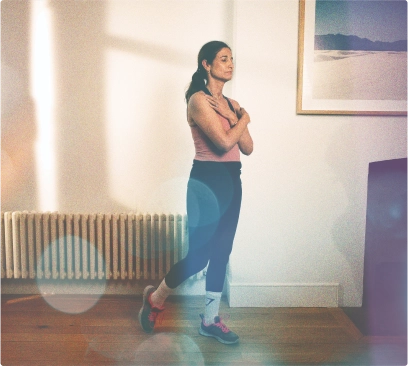
6. ALWAYS MONITOR YOUR EXERTION
Physiotherapist Riccardo Piovesan recommends that patients should learn how to monitor the perceived exertion of any exercise they are doing.4,6
Riccardo suggests using a tool called the Borg RPE scale to measure your perceived exertion.9
- Anziska Y, Sternberg A. Exercise in neuromuscular disease. Muscle Nerve. (2013) 48:3–20.
- Abresch RT, Han JJ, Carter GT. Rehabilitation management of neuromuscular disease: the role of exercise training. J ClinNeuromuscul Dis. (2009) 11:7– 21.
- Gilhus NE, Verschuuren JJ. Myasthenia gravis: subgroup classification and therapeutic strategies. Lancet Neurol. (2015)14:1023–36.
- Gilhus NE. Physical training and exercise in myasthenia gravis. Neuromuscul Disord. 2021 Mar;31(3):169-173.
- James F. Howard Jr.,MD., ed. Myasthenia Gravis A Manual for the Health Care Provider. Myasthenia Gravis Foundation ofAmerica (2008)
- Bi Z, et al. Front Immunol 2023;14:1177249.
- Elsais A, Johansen B, Kerty E. Airway limitation and exercise intolerance in well-regulated myasthenia gravis patients. ActaNeurol Scand Suppl. (2010) 122:12–7.
- Krivickas LS. Exercise in neuromuscular disease. J Clin Neuromuscular Dis. (2003) 5:29–39.
- Williams N. The Borg Rating of Perceived Exertion (RPE) scale. Occupational Medicine. (2017) 67:5404–405.
To report any safety information concerning our products please contact us.